The dinner
A Berber dinner: tea, tagine and the table
The ideas behind a Berber desert dinner: who the Berbers are, how mint tea is served, what a tagine is and what Berber music can sound like.
See this evening's dates ↗Quick answer
A Berber dinner draws on North African hospitality: mint tea poured for guests, a slow-cooked tagine, bread and food shared from common dishes. Wikipedia describes these traditions, but the booking page gives no menu or programme, so what you eat and hear depends on the operator.
Table traditions in brief
| Tradition | What Wikipedia says | What to expect |
|---|---|---|
| Mint tea | Green tea with spearmint and sugar, central to social life | A glass offered to guests |
| Tagine | A stew named for its cone-lidded clay pot | Slow-cooked meat, poultry or fish with vegetables |
| Bread and hands | Moroccans traditionally eat with their hands and use bread | Shared dishes and hand-torn bread |
| Ahidus | A collective Berber performance of song, dance and poetry | A circle of performers around a leader |
Berber or Amazigh
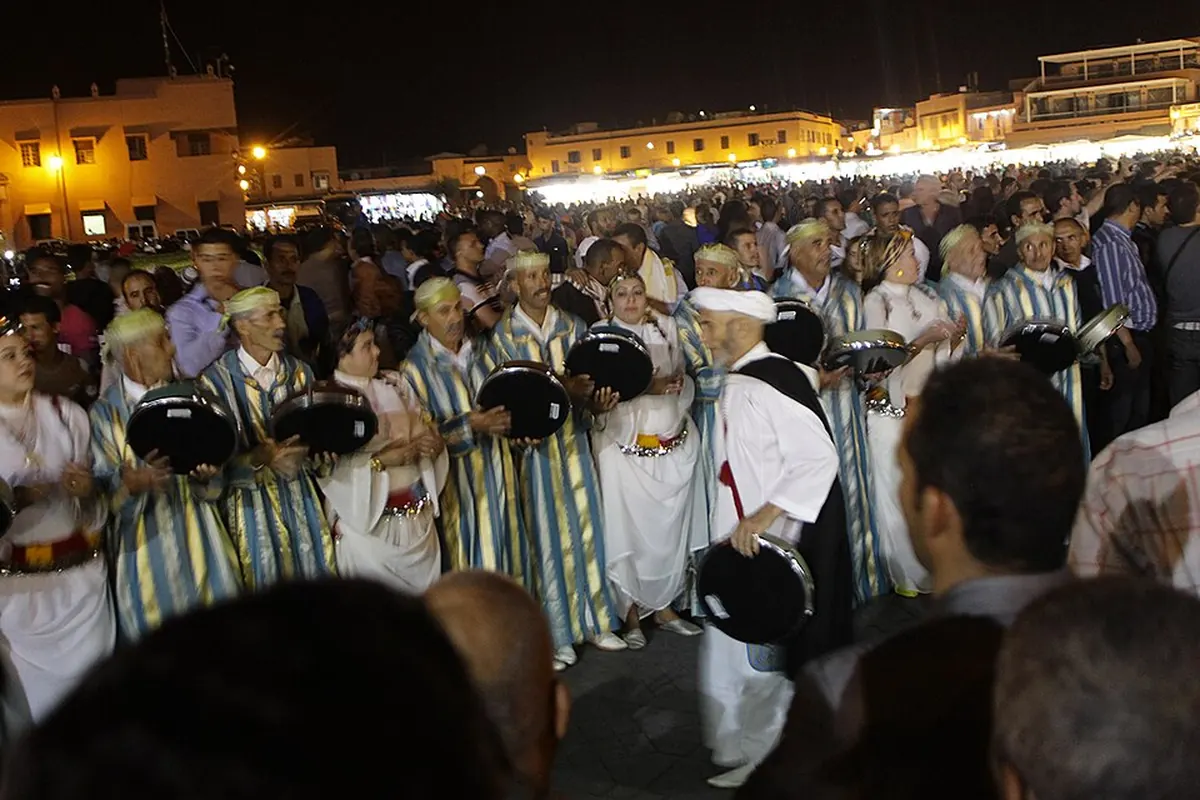
Wikipedia explains that Berbers, also known as Amazighs or Imazighen, are an ethnic group indigenous to North Africa, connected mainly through their Berber languages. Many in the community view the word Berber as pejorative and prefer Amazigh. Listings often use Berber because travellers recognise it, and this site follows the listing's wording while noting the other name. Berber communities live across Morocco, Algeria and beyond, and Wikipedia says the Atlas Mountains are primarily inhabited by Berber populations.
Mint tea
Maghrebi mint tea is gunpowder green tea with spearmint leaves and sugar. Wikipedia says it is central to social life in the Maghreb, that the serving can take a ceremonial form when prepared for a guest, and that at least three glasses are typically served. It also says the tea is poured into glasses from a height to aerate it, and that each glass has a different flavour because the leaves stay in the pot. Offering tea is a gesture of welcome, so accepting a glass is polite.
The tagine
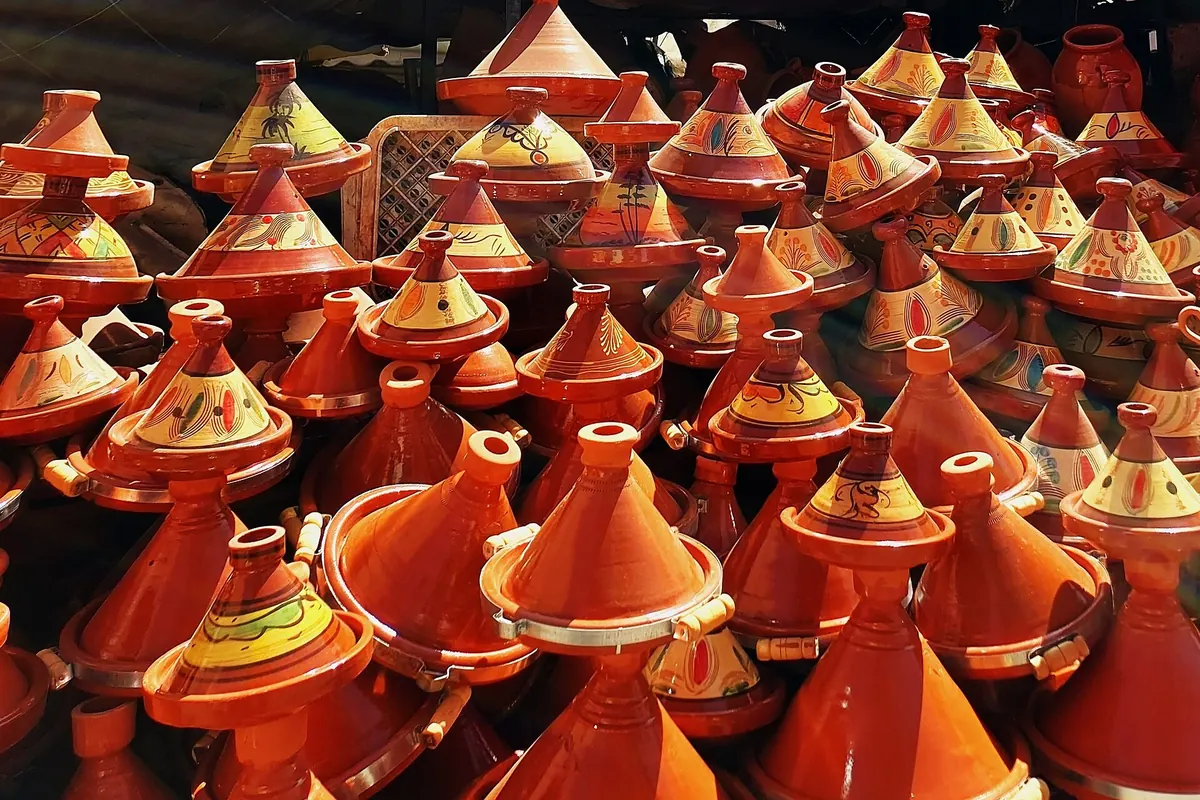
The word tagine covers a stew and the pot behind it. Wikipedia describes a shallow clay dish topped by a tall cone or dome that drips condensation back onto the food, which keeps the water to a minimum, and says the stew usually pairs spiced meat, poultry or fish with vegetables or fruit. Charcoal is the traditional heat. Common spices include ginger, cumin, turmeric, cinnamon and saffron. The booking page gives no menu, so whether your dinner includes a tagine is for the operator to say.
Bread, couscous and eating together
Wikipedia's article on Moroccan cuisine says that traditional communal eating habits and ceremonial tea service are central to social gatherings, and that Moroccans traditionally eat with their hands and use bread. A typical lunch begins with salads, followed by a tagine or similar dish. Couscous, which Wikipedia describes as a staple of Maghrebi cuisines and probably of Berber origin, is another dish you may meet. None of this is promised by the page, but it shows what shared Moroccan eating can look like.
Argan oil
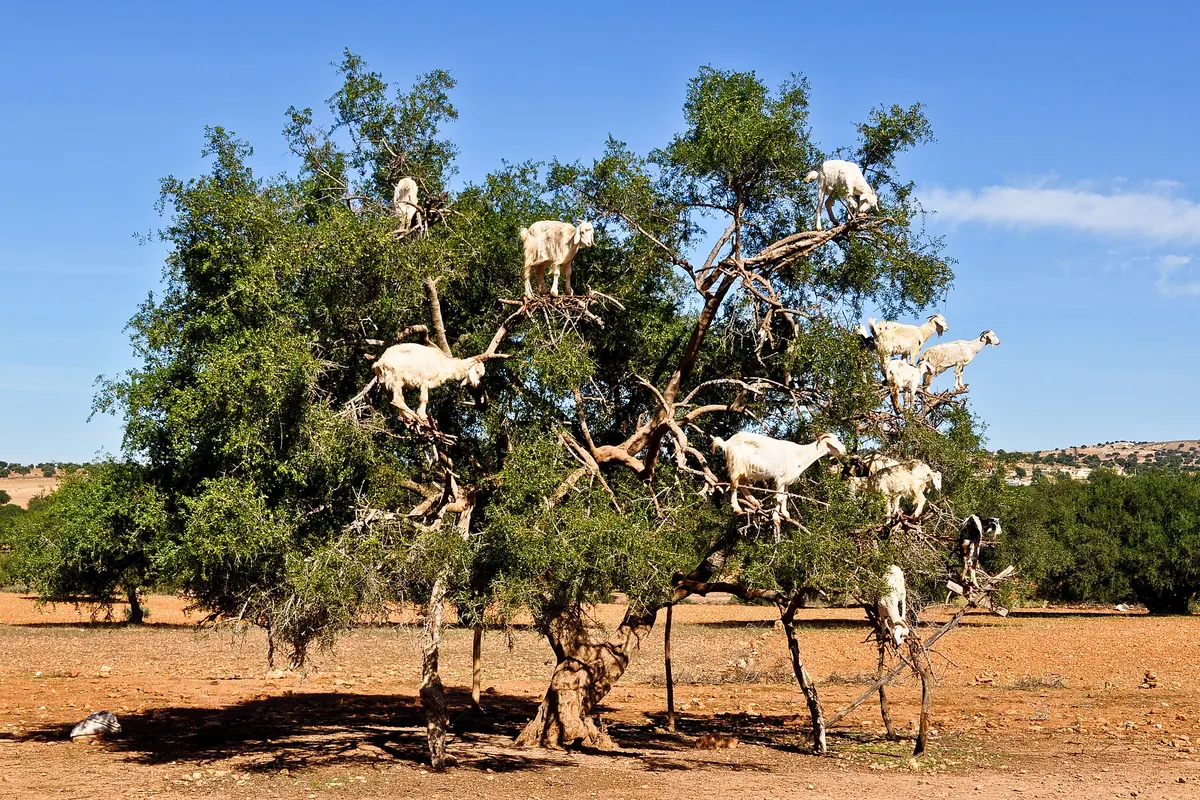
One of the comparison listings mentions learning about argan oil, so it is worth knowing what it is. Wikipedia says argan oil comes from the kernels of the argan tree, which is indigenous to Morocco and southwestern Algeria, and is used for dipping bread, on couscous and in cosmetics. It also notes that a tradition in some areas lets goats climb the trees to feed on the fruit. It takes about 40 kilograms of dried fruit to make one litre of oil.
Music and dance
Wikipedia describes ahidus as a Berber collective performance of songs, dances and improvised poetry, with performers standing shoulder to shoulder in a circle or two lines around a leader. Berber music uses instruments such as the bendir, a frame drum, and the ginbri, a plucked string instrument. The booking page promises a live cultural show under the stars, but gives no running order, so these traditions are background rather than a forecast.
Frequently asked questions
Will dinner be a tagine?
The booking page does not list a menu, so we cannot say. Ask the seller if you want to know, and mention any dietary needs.
Is alcohol served?
The page does not say. Wikipedia notes alcohol consumption is uncommon in Moroccan cuisine because of religious restrictions.
Is the music live?
The page calls the show live. Beyond that, it does not describe the music.
Sources
- Berbers on Wikipedia, for the people and their languages
- Tagine on Wikipedia, for the pot and the stew
- Moroccan cuisine on Wikipedia, for meals, spices and eating together
- Maghrebi mint tea on Wikipedia, for how tea is served
- Ahidus on Wikipedia, for Berber collective song and dance
- Berber music on Wikipedia, for instruments and styles
- Argan oil on Wikipedia, for the oil and its tree